

Transferring your wealth to the next generation is typically not a straightforward process. When considering how to safeguard your wealth for future generations, one of the most critical steps is estate planning. So, what is estate planning? In its simplest form, it is a combination of financial management strategies that help you prepare for several potential scenarios, including death and incapacitation. When planning your financial future, estate planning can help you manage and transfer your assets while mitigating potential taxes and legal hurdles.
Without knowing what an estate plan is or having a comprehensive plan in place, your estate could be diminished over time by taxes, fees, and more. In this blog, we’ll outline the important factors to consider when building an estate plan, the benefits of a trust plan vs. a will, and how estate planning and trusts can go hand-in-hand.
What Goes Into Estate Planning?
To understand what estate planning is, it is important to understand the key factors that make up a holistic plan. From wills to trusts, there are many ways to preserve your financial legacy for generations to come.
Last Will and Testament
An individual’s last will and testament is a crucial part of the estate planning process. This document serves two critical purposes: (1) to outline how an individual’s assets will be distributed after death, and (2) to designate who will be in charge of the process. This will allow you to name beneficiaries, designate guardians for minor children, and specify how debts and taxes should be handled.
When planning a will, you might consider using it in conjunction with an estate planning tool such as a trust. This is because a last will and testament is subject to the probate process, which can be time-consuming and costly.
Trusts
Trusts are another crucial component of the estate planning process, especially for individuals with sizable estates looking to protect and efficiently transfer their wealth. Because your last will and testament would be subject to the probate process, placing assets into a trust helps reduce complications; some trusts can also help reduce tax exposure and provide long-term financial security for future generations.
Trusts come in many varieties, including revocable and irrevocable. By “removing” certain assets from your estate, irrevocable trusts can potentially lower your tax bill in both the short and long term. Ultimately, trusts offer flexibility and protection, making them a vital tool in preserving wealth and avoiding costly taxes.
Powers of Attorney and Healthcare Directives
If you’re suddenly unable to make financial decisions regarding your estate, who will act on your behalf? Without establishing power of attorney, the answer would be unclear. A POA is a legally binding document that grants power to another person—called an “agent” or “attorney-in-fact”—to act on your behalf in financial or legal matters if you're unable to do so. Why is it important for estate planning? Having a POA in place ensures that your wealth and assets will be managed according to your wishes if you become incapacitated due to illness or injury. Without it, your family may have to go through a lengthy court process to gain control of your finances.
On top of a financial POA, you can also establish a healthcare directive to give authority to the agent to make healthcare decisions if you are unable to do so yourself. This can allow you to formally state your preferences for end-of-life care and other major decisions, making it another important part of a sound estate plan.
Your Unique Financial Situation
Finally, it is wise to consider that no two estate plans will look entirely the same. And what is estate planning if not a tool to help everyone find the right solution for their financial goals? It’s never too early to discuss with your family and financial partners who your beneficiaries will be, what your healthcare preferences are, and what sort of trusts you’d like to consider.
At BIP Wealth, our in-house estate planning team is led by veteran Estate Planning Advisor, Sarah Watchko. She’ll help guide your family through the process of securing your loved one’s financial future. Schedule a time to chat with us if you’d like to learn more about the guidance we can provide throughout your estate planning journey.
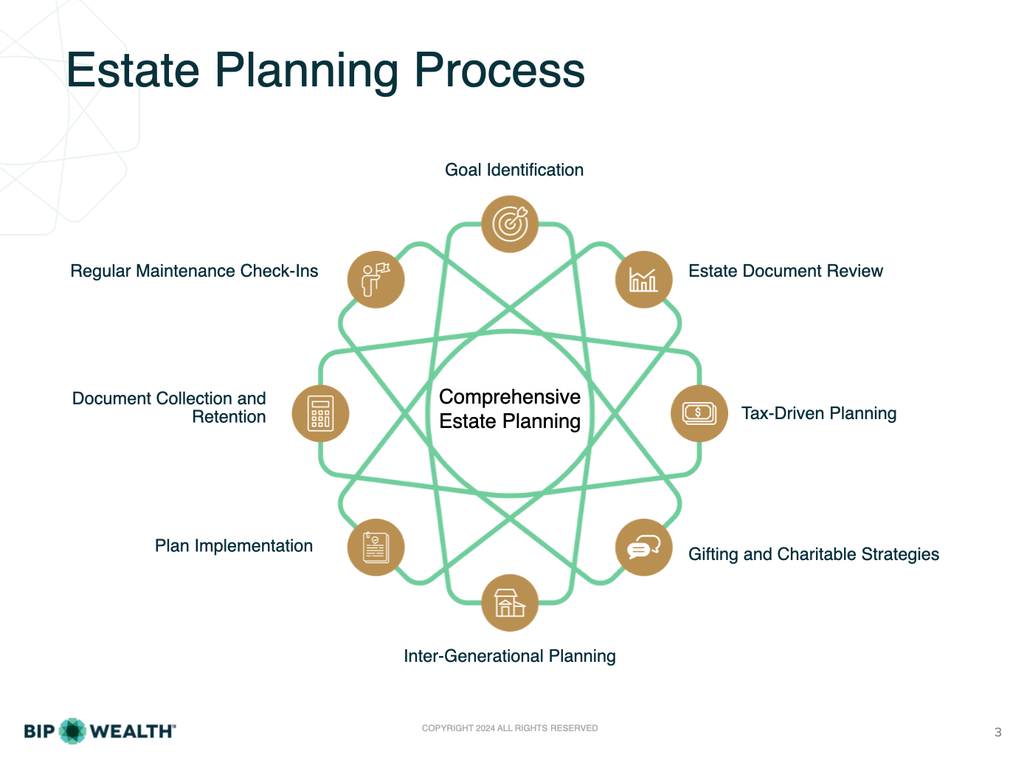
Why Estate Planning Matters
Now that we know what estate planning is, let’s briefly discuss the top three benefits you may enjoy from a comprehensive plan.
Control Over Your Wealth
Estate planning is what can help you achieve greater control over how and when your assets are distributed. You can designate specific instructions for different beneficiaries, set up trust funds with conditions, and protect assets from creditors, lawsuits, or even divorce.
Prevent Conflicts Among Beneficiaries
Organizing your estate ahead of time can ensure that your estate is transferred smoothly. Estate planning ensures that your loved ones, including minor children or dependents with special needs, are provided for in a way that aligns with your ultimate wishes and reduces the potential for conflict.
Mitigating Taxes and Fees
For high-net-worth individuals, one of the most significant benefits of estate planning may be the potential to significantly reduce these taxes to protect your wealth.
FAQs
What are the most important tools in estate planning?
The most important estate planning tools include wills, powers of attorney, healthcare directives, and trusts, which can ensure your wishes are followed.
How can trusts improve your estate planning strategy?
Trusts can help remove assets from your probate estate to ensure the efficient transfer of wealth, and in some cases, protect from wealth transfer taxes.
Why should you include a will as part of your estate plan?
A last will is a crucial part of any estate plan. It allows you to designate beneficiaries, name guardians for minor children, and avoid potential disputes. Without a will, state law determines how your assets are distributed, and a court may have to decide who is in charge.
When should you update your estate plan to reflect life changes?
It is best to update your estate plan after significant life changes, such as marriage, divorce, the birth of a child, the acquisition of new assets, or a move to a new state. Additionally, you should review your plan periodically to account for changes in tax laws or personal circumstances.
BIP Wealth, LLC (“BIP Wealth”) offers investment advisory services and is registered with the U.S. Securities and Exchange Commission (“SEC”). Registration with the SEC as a registered investment adviser does not imply a certain level of skill or training. For more information about BIP Wealth, please refer to our Form ADV, available at adviserinfo.sec.gov or upon request.
This commentary is intended for informational purposes only and does not constitute tax or legal advice. Please consult your personal tax professional and estate planning attorney before making any tax or legal decisions. Investors should seek tax and legal advice based on your particular circumstances from an independent tax professional and estate planning attorney as laws are subject to interpretation, legislative change, and are unique to each individual's particular set of facts and circumstances. The opinions in this commentary are as of a specific date and are subject to change.
Sarah Watchko is an employee of BIP Wealth and has been serving families’ estate planning needs for nearly 20 years.
