If you filed your Georgia taxes before Governor Kemp signed HB 1199 into law, you may need to file an amended return. Here’s what happened and what to do next.
Earlier this week, Governor Kemp signed the Georgia Conformity Bill (HB 1199) into law—and if you’re a Georgia taxpayer, it’s worth a few minutes of your time to understand what it means.
This legislation updates Georgia tax law to align with the federal One Big Beautiful Bill Act (OB3) in most areas. But here’s the important part: Georgia chose not to conform on a couple of key provisions, and those differences could affect your state tax return.
At the federal level, the OB3 raised the State and Local Tax (SALT) deduction cap to $40,000. Georgia, however, voted not to follow suit. The state’s SALT limitation will remain at $10,000.
What does that mean in practice? If you itemized your deductions and included more than $10,000 in state and local taxes—think income tax withholding, property taxes, and ad valorem taxes paid to Georgia or other states—you may need to amend your Georgia return to reduce those itemized deductions back to the $10,000 state maximum.
The federal OB3 introduced provisions eliminating taxes on tips and overtime pay. Georgia also chose not to adopt these. State lawmakers indicated that these policies would require separate legislation, given the significant fiscal implications involved.
So, if you took either of those deductions on your federal return, you may need to file an amended Georgia return adding that income back for state purposes.
The good news? Most self-preparation tax software platforms are already aware of these changes. Some platforms, such as TurboTax have begun notifying affected users directly, and in many cases, amending a return through these platforms can take less than 15 minutes.
If you work with a CPA, I’d encourage you to reach out to your preparer to ask whether your return may need to be amended in light of HB 1199.
The Georgia Department of Revenue has made its position clear: returns filed incorrectly will be expected to be amended. While no formal penalty or interest relief has been announced, a waiver can always be requested. That said, returns amended prior to the April 15th deadline—with any additional tax paid—would generally not be subject to additional penalties or interest.
The bottom line: if this applies to you, it’s worth acting sooner rather than later.
If you have questions about how the Georgia Conformity Bill may affect your specific situation, please don’t hesitate to reach out to our team. At BIP Wealth, we work closely with our clients and their tax professionals to stay ahead of changes like these so you can focus on what matters most.
This content is general in nature and is for informational purposes only. It is not intended as tax advice and should not be relied upon as such. Individual circumstances vary, and taxpayers should consult with their own tax professional before taking action. BIP Wealth, LLC is a registered investment adviser (RIA). Registration does not imply a certain level of skill or training.
BIP Wealth, a Registered Investment Advisor (RIA) headquartered in Atlanta with over $5.5B in assets under management has partnered with Constellation Wealth Capital (CWC) to receive a strategic investment to support BIP’s continued growth. Recently named to Financial-Planning.com’s 2025 Top 150 RIA Fee-only Firms List, as well as the top 3 on the Atlanta Business Chronicle’s 2025 Best Places to Work List for medium-sized companies, BIP Wealth focuses on holistic wealth management and sophisticated planning solutions for high-net-worth individuals and families, institutional clients, and corporate retirement plans. CWC is a partner to growing wealth management firms and known for its flexible, long-term, minority investments. CWC’s deep advisory focus supports the partner firm’s management team scale effectively, while preserving independence.
CWC’s investment builds upon BIP Wealth’s foundational excellence in client service and advisor support. BIP gained $725M in new organic assets under management in 2025 and expects to exceed that benchmark in 2026, in part supported by CWC’s strategic advisory efforts. Additionally, CWC’s investment will provide BIP with capital to further partner with successful wealth management firms and broaden BIP’s impact in the Southeast and beyond.
“We want to offer our client-first, servant leadership model to other firms looking for a solution. Whether a founder is looking for help with their succession plan or wanting to fuel their next stage of growth, we want to partner with like-minded people,” shared Bill Harris, CFP®, Co-Founder & CEO of BIP Wealth. “This partnership with CWC will open new doors of growth in our business that will benefit our clients and our entire team. We have a lot to offer with our deep expertise in private investments and advanced planning capabilities with Estate Planning and Tax Professionals on our team. I’m excited about the future of where BIP Wealth is headed as we continue to grow.”
Announced in 2024, BIP’s acquisition strategy complements its strong organic growth by partnering with culturally-aligned, service-first firms and founders. With more than $1.2B of assets under management added via two new partnerships—The Money Advisor Group in 2024 and Prehmus Financial in 2025—BIP expects CWC’s investment will accelerate its inorganic growth pipeline. Chase Corporate Advisory’s Jeff Singh represented BIP Wealth throughout the process to determine the best capital partner on a go-forward basis and made the initial introduction between BIP and CWC.
“At the end of the day, we want to partner with people who value what we do. We’re looking for people who are fiduciaries first and respect our values,” reiterated Bill Harris. “Our unique investment platform empowers advisors who want flexibility in the portfolio management and planning process. I want to extend our value proposition to advisors not just in the Southeast, but to select other centers of innovation around the country.”
One thing that’s clear is that BIP will continue to be highly selective, yet competitive, as they pursue firms to partner with who share a similar cultural alignment. BIP wants to be the partner of choice for RIAs looking to accelerate growth and expand solutions for clients, while being part of a collaborative culture.
“When we look for qualities in a firm to partner with, the BIP Wealth team checked all the boxes,” expressed Karl Heckenberg, President & Managing Partner of Constellation Wealth Capital. “It’s important to us to partner with people who value partnership and client service. Seeing their impressive organic growth and dedication to clients, we knew we wanted to link arms and help support the growth of the BIP Wealth platform in the future.”
BIP Wealth maintains 5 offices: Atlanta, Alpharetta, Columbus, and Peachtree Corners, GA, and Nashville, TN, while serving clients across the country.
Check out our official Press Release on PR Newswire here.
Private Credit is a large and growing category in the private market investing landscape. With exits harder to come by lately, more companies are adding debt to their capital structure (for several reasons that include avoiding direct dilution of equity). The dramatic increase in importance of private credit to the funding of companies has also led to a proliferation of funding vehicles that investors might participate in. New managers are popping up almost daily, and new vehicle types are emerging too. Co-investments, drawdown funds, public BDCs, private BDCs, and now Interval Funds are all seeing growth. These vehicles are making it easier for retail investors to include private credit in their portfolios.
In the broader credit markets, several trends are unfolding that could have a negative impact on some parts of Private Credit.
First, base rates are falling. The Fed has now lowered the overnight rate, as it should, to remove us from a restrictive stance. Many private credit strategies use floating rate loans, so falling rates will naturally lower yields. Investors should keep in mind that their return is a combination of the yield and the always changing price. Minor fluctuations in price are normal, and investors can expect yields to be lower in 2026 than they were in 2025. The long end of the yield curve is falling too, as the Fed ends quantitative tightening (no longer dumping bonds on the market to decrease its balance sheet, which was draining liquidity out of the system). We are also near a multi-year low point for credit spreads, reflecting that investors are getting paid less to take credit risk.
The combination of new money coming into Private Credit, along with a changing rate structure and price for credit risk, will certainly influence Private Credit in the larger sense. But the devil is in the details, and broad pronouncements that read something like “private credit is in trouble” are not accurate, not helpful, and outright confusing to our clients.
At BIP, we believed this would eventually happen, and we welcome the market pressure. It’s our chance to prove we know what we’re doing. This is the perfect time to show how real knowledge is so much more valuable than just knowing the headlines. Our clients are counting on us at BIP Wealth to get this right. And we have already done our homework to make sure we have a variety of evergreen strategies that we expect to do well in a variety of economic conditions.
Business Development Companies are entities that meet certain regulatory requirements created in 1980 and are close-end funds that distribute 90% of income. We track about 3 dozen publicly traded BDCs, and 2025 returns through 12/31/25 range from +16.75% to -27.38%, with more in negative territory than positive. This is markedly different from the returns we are seeing in the vehicles we’re using, and you may notice that few survived the pullback in credit markets during 2022 unscathed.

BSLs tend to be of lower quality and lack the covenants and remedies that are the hallmark of our strategies. BSLs are originated by banks, securitized, and then traded daily. Some might equate this to juggling chainsaws when credit markets turn sour—you want to drop them as quickly as you can to avoid getting your hand cut off.
These are, by nature, not diversified. But here again, the details are important. Many are convertible notes, which in reality are equity deals that pay a yield to the investor and sit above other equity investments in terms of their priority. We have a long history of enjoying some of our best equity returns from these investments.
We expect to be able to prove to our clients that your trust in us is warranted. But this comes with the obligation to explain our prudent process in a world of scary headlines. If the risky end of the private credit market does start to experience significant stress, some of our clients may become concerned.
If you would like to learn more about our Private Credit strategies and if they might be a fit for you, the BIP Wealth team is here to help. Contact us today to be connected with a trusted advisor.
This post is provided for informational purposes only. Specific investments may not be suitable for all investors and no offer or recommendation of any investment or investing strategy is intended or implied by your choosing to read this post. Privately traded offerings may only be available to investors who meet certain qualification statuses.
This material is not intended to be relied upon as a forecast or investment advice regarding a particular investment or the markets in general, nor is it intended to predict or depict the performance of any investment. Past performance is no guarantee of future results. All investments involve risks including loss of principal.
Prehmus Financial Partners, a wealth management firm specializing in investment management and financial planning, has entered into an agreement to be acquired by Atlanta-based RIA BIP Wealth through a blended cash and equity deal. Through this strategic acquisition, Prehmus Financial clients and future investors will gain expanded access to BIP’s wealth management platform, advanced planning capabilities, and client technology suite. The acquisition increases BIP Wealth’s assets under management to more than $5 billion.
Recently named among SmartAsset.com’s Top 10 RIA Firms in Atlanta and ranked in the Top 3 on the Atlanta Business Chronicle’s 2025 Best Places to Work list for medium-sized companies, BIP Wealth provides investment management and sophisticated planning solutions for high-net-worth individuals and families, institutional clients, and corporate retirement plans.
Prehmus Financial was founded in 1995 by Warren Prehmus with a mission to give clients financial peace of mind by protecting and growing their wealth and organizing their financial lives. The partnership between Prehmus Financial and BIP Wealth strategically unites two firms that share a people-first approach and a deep commitment to client service and community involvement.
“From the first conversation with BIP, our focus has been on how this new partnership will benefit our clients and team members,” said Warren Prehmus. “BIP’s client-first approach aligns perfectly with our values and priorities while expanding our operational capacity.”
“Our clients have been, and always will be, our top priority. The responsibility they entrust to us is critical, and we take that very seriously. This integration with the BIP Wealth team has tremendous potential to add value. While we are in the early stages of determining how to maximize the integration, it’s been very exciting to discuss the future together,” commented Prehmus Financial’s Chief Investment Officer, Chad Edwards. “That being said, BIP Wealth has empowered us to continue to prioritize thoughtfulness and care for our clients over speed during this transition and we are grateful for that. It is an exciting time to be at both BIP Wealth and Prehmus Financial.”
The partnership between Prehmus Financial and BIP Wealth represents a unique opportunity for team members on both sides to build on their pre-existing capabilities. Prehmus Financial team members will gain access to additional planning capabilities and resources, along with a client acquisition and service model that has produced significant client growth and retention. For BIP Wealth, the acquisition continues a growth strategy centered on building value by partnering with well established and highly respected firms.
“The partnership with Prehmus Financial accelerates BIP’s strategic expansion and extends our value proposition as we partner with great people who share our values,” said Bill Harris, CEO of BIP Wealth. “The Prehmus Financial team brings a shared commitment to excellence and lifetime service to their clients. We are excited to welcome them to the BIP family.”
The acquisition of Prehmus Financial, which closed on September 30, 2025, increases BIP’s assets under management (AUM) to more than $5 billion. The entire Prehmus Financial team will join BIP Wealth through the transition. For other advisors or RIAs interested in partnering with BIP Wealth, please reach out to BIP at bipwealth.com/partner-with-us/.
BIP Wealth maintains offices in Atlanta, Alpharetta, Columbus, and now Peachtree Corners, Georgia, as well as Nashville, Tennessee, and serves clients across the country.
About BIP Wealth
BIP Wealth is a leading registered investment advisory (RIA) firm with more than $5B in investment assets under management for its clients, which include high-net-worth individuals and families. BIP Wealth combines precise financial science and industry expertise, offering tailored advisory services and ongoing communication. BIP Wealth gives accredited investors curated direct access to private equity, venture capital, and private credit. There is a focus on technology innovation, as well as a deep commitment to openness and transparency. Founded in 2007, BIP Wealth operates in Atlanta, Alpharetta, Columbus, and now Peachtree Corners, Georgia; and Nashville, Tennessee. Find more information about BIP Wealth at bipwealth.com/.
About Prehmus Financial
Prehmus Financial is a wealth management firm with more than $900M in assets under management (AUM) which specializes in investment management and financial planning. Established in 1995 by Warren Prehmus, the firm added Partners Chad Edwards, Scott Levy, and Drew Prehmus over a decade ago. They will continue to serve families and small businesses across the country. Find more information about Prehmus Financial at bipwealth.com/prehmus.
BIP Wealth, recently named in the top 3 on Atlanta Business Chronicle’s 2025 Best Places to Work List for medium-sized companies, is proud to welcome the addition of former Georgia Tech Baseball Coach Danny Hall as Vice President of Strategic Growth. Hall joins other Georgia Tech Alums at the firm, including BIP Co-Founders, Bill Harris and Mark Buffington.
Hall has long been connected to BIP Wealth, first through Randy Carroll, BIP’s Chairman, and has coached a total of 5 current BIP team members over the years who played baseball at Georgia Tech (Michael Sorrow, Kyle Schmidt, Chase Murray, Drew Byers, and John Giesler). Hall and his family have been clients of BIP’s Baseball Division since 2007 and had the privilege of having Jim Poole as their Personal Wealth Advisor before he succumbed to ALS in 2023.
“There was not a better human being on the face of the earth than Jim Poole,” said Hall. “He managed my family’s money and we never had to worry about a thing. We always knew we were getting the utmost care from Jim and the entire team at BIP Wealth and that has seamlessly continued on since Jim’s passing.”
During his career, Hall racked up 1,452 wins across 38 seasons as a head coach of which 32 seasons were spent at Georgia Tech. He ranked 10th in NCAA Division I history in career wins before deciding to step away from coaching after the 2025 season. While at Georgia Tech, Hall guided the team to 7 ACC regular-season championships, 5 ACC Tournament titles, 24 NCAA Tournament berths and 3 College World Series. Across 32 seasons, Hall saw 146 players selected in the Major League Draft, with 41 going on to play in the major leagues.
“Once I decided to retire, I wanted to pursue something that would keep me around the sports world and allow me to continue helping people like I did as a coach,” said Hall. “Joining the team at BIP Wealth was a natural transition and next step for me. I feel like a rookie all over again learning all about the possibilities BIP can create to help take care of our clients.”
Hall will be working alongside not only BIP’s Baseball Division, but all the other Advisors at the firm to help grow new business.
“As an Alumni of Georgia Tech Baseball myself, having Coach Hall join the team at BIP Wealth is an honor,” shared Co-Founder and CEO, Bill Harris, CFP®. “Watching the care and guidance that Danny has given to his players over the years, I have no doubt he will do the same for new clients at BIP in his new role. As BIP continues to grow our presence across the Southeast, I’m excited to have Danny representing the BIP brand everywhere he goes.”
Hall lives in Alpharetta with his wife of 32 years, Kara. They have two sons, Colin and Carter. Carter interned at BIP Wealth in the Baseball Division while he attended Georgia Tech. Both sons played baseball at Georgia Tech and still live in the Atlanta area.










Check out our official Press Release on PR Newswire here.
If you have been consuming financial news this week, you will know the stock market has taken a bit of a plunge due to the tariffs announced on Wednesday afternoon. This comes on the heels of a volatile stock market in the first quarter. We wanted to give you BIP Wealth’s perspective on these recent events, although we are not ready to predict the final outcome.
We think the best way to understand what’s happening is to consider the actions of the four forces at play:
The current administration is using tariffs to re-write the economic relationship between the United States and other economies. For many years, other countries have imposed tariffs on U.S. goods and services that have been a bit lopsided against us. The U.S. has imposed its own tariffs on some imported goods in an effort to protect workers, while at the same time there have been numerous “free trade” agreements with favored nations. The history of tariffs goes back hundreds of years, but in more recent times the U.S. has emerged through it all as the world’s leading consumer economy of imported goods, while oftentimes struggling to export its own products while struggling with downward wage pressure at home. These newly announced tariffs are a powerful negotiating tool designed to leverage our consumer appetite and economic strength, but it is impossible to know where this will all settle out and when.
China has already announced retaliatory tariffs, although one could argue that the new U.S. tariffs were in retaliation for a massive trade imbalance that China protected. Over the next week we can expect to hear similar announcements from dozens of countries. This progression into a “trade war” could have a significant negative impact on the global economy, however many countries are expected to reach out to the Trump administration to negotiate. Some of these responses will likely be an effort to make the kind of “phenomenal offer” that President Trump has hinted he would be looking for. It is impossible to predict how this will end, but we will be watching to see the terms of the first few deals to see what it takes to settle these issues.
For the past year, the Fed has enjoyed owning what is often called the “Fed Put.” This is borrowing terminology from the options markets, and refers to the idea that if the economy gets in trouble then the Fed can respond by lowering interest rates to prevent a recession. However, this only works when inflation is contained. Generally speaking, when interest rates are lowered it can cause inflation to rise; and with the Fed having bungled this quite a bit in the post-pandemic era they will likely be slow to move. Today President Donald Trump called on the Fed to lower overnight rates immediately. But tariffs on imported goods are expected to double the rate of inflation in 2025 to perhaps a rate of 5%, so any move by the Fed that could make that worse is quite the gamble. The Fed has a mandate to foster full employment, stable long term interest rates, and low inflation; but it does not have a mandate to do exactly what is being asked of it now. It is impossible to know how the Fed will respond at this point, although we will be listening intently to find out.
For the moment, the idea of tariffs seems to enjoy broad support among working Americans. Many families have watched in frustration for decades as furniture, textile, and manufacturing jobs have been offshored. Real wage growth in non-technical jobs has been slow, and it is correct to think that globalization has worsened the economic fortunes for many Americans. At the same time, we have enjoyed the benefits of lower prices on goods manufactured in low labor cost countries in Asia and elsewhere. Wall Street voices have been highly critical of the scope and pace of the new tariff policies this week, but that group is simply not the President’s constituency. If we fall into a recession, and American unemployment spikes, it will likely be happening around the globe even worse.
Understanding the situation through these four forces may not give you any comfort right now. But this is how we see it, and we’re watching events unfold just like you. Let’s keep in mind that a relief rally could be upon us at any time, and it could be a big mistake to assume that the pace of the sell-off will simply continue.
In our Annual Market Report earlier this year we suggested some steps you could take to prepare for this kind of uncertainty. Click the link below to check out Eric Cramer’s Webinar from Q1…
As a reminder, here are our 4 Key Themes for 2025 and what we’ve seen so far:
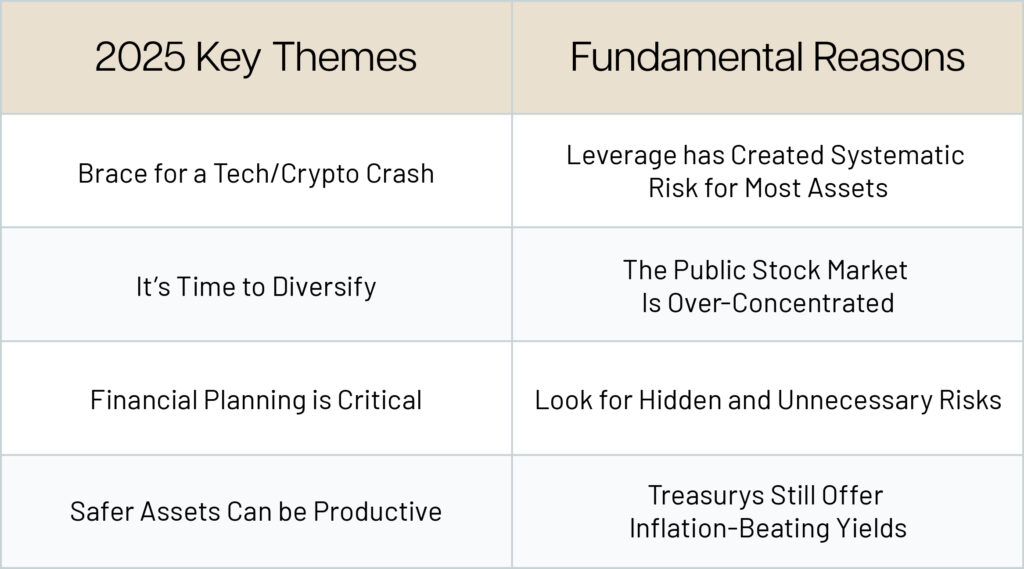
Brace for a Tech/Crypto Crash (Leverage has Created Systematic Risk for Most Assets)
Well, tech stocks did crash. We have strategies in place to help clients with large concentrations to mitigate risk.
It’s Time to Diversify (The Public Stock Market is Over-Concentrated)
We suggested that indexing would not be sufficient due to the concentration in public equities, and that using private credit in particular could be an effective way for many clients to possibly increase their expected return while lowering their expected risk.
Financial Planning is Critical (Look for Hidden and Unnecessary Risk)
We did our best to suggest that some clients may have more exposure to public equities than they “needed” to have. This was in addition to the other benefits of financial planning, such as risk mitigation through an insurance review.
Safer Assets Can be Productive (Treasurys Still Offer Inflation-Beating Yields)
We offer clients BIP Short-Term Tactical, which is our proprietary trading strategy providing an alternative to holding cash in banks. The primary goals of the strategy include achieving a rate of return higher than banks commonly offer, capital preservation, and liquidity, while mitigating risk.
While we can’t predict the future, we strongly suggest having a well-rounded financial plan. This is a great time to take a look at your particular situation and work with a BIP Personal Wealth Advisor so you can take advantage of all the tools we have at our disposal.
Thanks for reading, and please know that we will continue to update you as events unfold.
This post is provided for informational purposes only. Specific investments may not be suitable for all investors and no offer or recommendation of any investment or investing strategy is intended. The opinions in this commentary are as of the posting date and are subject to change. Information has been obtained from third-party sources we consider reliable, but we do not guarantee the facts cited are accurate or complete. This material is not intended to be relied upon as a forecast or investment advice regarding a particular investment or the markets in general, nor is it intended to predict or depict the performance of any investment. We may execute transactions in securities that may not be consistent with what is mentioned here. Investors should consult their financial advisor on the strategy best for them. Past performance is no guarantee of future results. All investments involve risks including loss of principal.
Author: Eric Cramer, CFP® CFA®
September’s strong jobs report surprised some, but we’ve been telling our clients the economy is fundamentally strong all year. The short version of what we learned with the release of the September jobs report is this: We added 254,000 jobs in September, which is much stronger than the 150,000 consensus forecast.
What does this mean for the economy?
It was widely reported in late August that the BLS had a massive revision downwards in job growth from 3/2023 to 3/2024 (they revise every year). They reduced the amount of job growth by 818,000 jobs, which is one of the largest downward revisions ever. This stoked concerns of a “jobs recession” even though employers are struggling to find workers and other data (such as job openings) confirm a generally strong labor market.
It was less widely reported that in September, real GDP through the end of 2023 was revised up by 1.2%, and 2024 Q2 was revised up .1%. This was mostly due to stronger consumer spending, a metric we have consistently tracked (while also debunking the notion that consumers had run out of money).
It looks like the Fed’s slow pace of lowering rates hasn’t pushed us into a recession. And the Weekly Economic Index (WEI predicts GDP) suggests we aren’t headed for a recession anytime soon.
What does this mean for interest rates?
The strong economy may mean the Fed will take its time lowering interest rates. Current futures pricing shows a 25 bps cut on 11/7 and another 25 bps cut 12/18. Inflation is generally under control, but if energy prices spike due to increased tensions in the Middle East this could affect the data. But it’s safe to expect that we can continue to earn a yield on the short end of the Treasury yield curve that is well above the rate of inflation, and that our Short-Term Tactical strategy will have a useful role to play in client portfolios for the foreseeable future.
At the same time, longer term yields are on the move upwards. If this continues, then we will eventually end up with a so-called “normal” yield curve where investors earn more than the rate of inflation across all terms (even though we haven’t seen much of this for decades). This would be great for investors and businesses, and is what we can expect if the Fed eventually gets to a neutral stance and lets markets be free. It wouldn’t be unreasonable to expect that by the end of 2025 we have the short end of the curve at about 3-3.5%, with the long end of the curve at 4-6%. But there is a lot going on in the world right now that could change the picture between now and then.
What does this mean for the stock market?
As we’ve been saying all year, a strong economy that doesn’t go into a recession suggests it’s a good time to be a stock market investor. A Fed that is lowering rates, and promises to lower them as much as needed to protect the economy, is called the “Fed Put.” We’ve got that right now, and that’s about all a stock market investor could hope for.
But that doesn’t mean there won’t be some companies that aren’t big losers. Individual stock volatility is still quite high, and we think that will continue. Macro events, along with changes in technology that include the emergence of AI as an essential business tool, will re-order the competitive landscape. Many billions of dollars are being invested in innovation all over the world, and especially in the U.S. This isn’t happening in a vacuum—it’s happening with the explicit intention of changing which companies win, and which fall by the wayside. That makes it a good time to be diversified, and for many investors a good time to look at investment strategies like our Concentrated Stock strategy to manage risk.
We are thrilled to announce that for the third year in a row, BIP Wealth has been recognized by the Atlanta Business Chronicle as one of Atlanta’s Best Places to Work, marking another milestone in our commitment to excellence. This year, we proudly rank #1 for Medium-sized companies, standing alongside other esteemed honorees such as Peachtree Planning Group, Snellings Walters Insurance Agency, and CA South, LLC. This recognition is particularly meaningful as it reflects the trust and satisfaction of our most valuable asset—our employees.
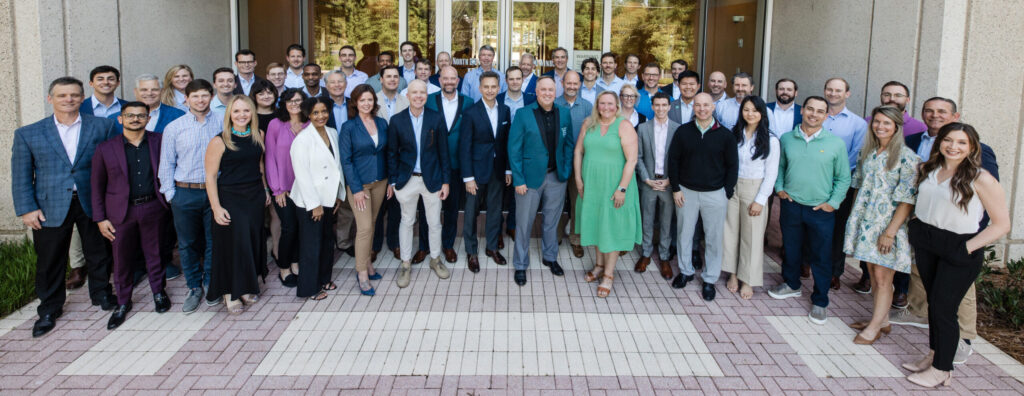
For our team, this accolade is not just about having a great workplace—it’s about the culture we’ve cultivated along the way. Human connection is at the core of our philosophy, both in our client work and within our team. We believe that when our employees feel valued, heard, and supported, they are empowered to deliver exceptional service to our clients.
“We’re honored that BIP Wealth has been recognized for the 3rd year in a row by the Atlanta Business Chronicle as one of the best places to work and this year as #1! Our venture capital firm, BIP Ventures, also made the rankings in their category this year, which is exciting too,” shared Bill Harris, CFP®, Co-Founder and CEO of BIP Wealth. “When Mark Buffington and I started BIP together in 2007, we wanted to create a culture of excellence in service to our clients and our team members at the firm. It’s particularly meaningful to me that both BIP Wealth and BIP Ventures are being recognized for one of our key values… a team-centric approach that fosters an environment of open communication and excellence. Our team supports each other and goes the extra mile for our clients.”

Founded in 2007, BIP Wealth is committed to improving our clients’ financial lives through highly personalized planning and investment strategies including direct and unique access to private market opportunities. Our comprehensive services include wealth planning and management, tax planning, estate planning, and more, and are designed to meet our clients’ current needs and future goals.
“Not only does our team work exceptionally hard for our clients, they’re also all incredible people,” adds Nate Smith, BIP Wealth Chief Operating Officer. “The community that Bill has cultivated within our team, clients and partners makes BIP a very special place to work.”
Servant Leadership: We lead with humility and respect, always putting our clients’ needs first. This commitment to servant leadership enables us to provide holistic wealth management services that strengthen our clients’ financial security.
Collaboration: Our team-centric mindset fosters an environment of open communication, blending our diverse expertise to create optimal financial strategies. We extend this collaborative spirit to our clients, ensuring a transparent wealth management process.
Excellence: We are relentless in our pursuit of growth with excellence, holding ourselves accountable to delivering industry-leading services. Our team guides clients through evidence-based investment strategies while unlocking opportunities in private equity, venture capital, and private credit typically reserved for the ultra-wealthy.
Sense of Community: We foster a sense of belonging within our team and among our clients. By extending our family-first ethos to everyone who interacts with BIP Wealth, we create a strong, supportive community.

At BIP Wealth, we’re not just a company; we’re a community of professionals dedicated to empowering each other and our clients. We invite you to learn more about our team and what makes BIP Wealth a special place or connect with our team. You can also visit us in person at one of our offices in Atlanta, Alpharetta, Columbus, and Nashville.
This recognition from the Atlanta Business Chronicle reaffirms our commitment to excellence, both in the workplace and in the services we provide to our clients. We look forward to continuing this journey together with our incredible team and valued clients.
Disclosure: BIP Wealth paid an application fee to be considered for the list, but the payment didn’t guarantee a place on the list. Companies are categorized by their size and nominated by their employees. Extra Large (500+ employees), Large (100-499 employees), Medium (50-99 employees), and Small (10-49 employees) companies were selected by the publication based on a number of factors, including employee engagement.
Neither rankings nor recognitions by unaffiliated rating services, publications, media, or other organizations, nor the achievement of any professional designation, certification, degree, or license, membership in any professional organization, or any amount of prior experience or success, should be construed by a client or prospective client as a guarantee that the client will experience a certain level of results if the investment professional or the investment professional’s firm is engaged, or continues to be engaged, to provide investment advisory services. No ranking or recognition should be construed as an endorsement by any past or current client of the investment professional or the investment professional’s firm.
